TL;DR
Ten years in digital marketing is about seventy in internet years, and as I get older my bandwidth is getting smaller. When I started, Facebook ruled the earth, you ran ads through a beautiful disaster called Power Editor, TikTok did not exist, and grown adults were buying fake likes by the thousand. Since then I have watched a pandemic torch our budgets and then set them alight in the good way, watched Google quietly help itself to more of your money while Facebook did not, and watched the whole industry sprint from one AI messiah to the next. Grab a cuppa, this one is a proper wander down memory lane.
Picture the scene. Facebook was the undisputed heavyweight of paid social, and if you wanted to run a serious campaign you did it through Power Editor, a tool so gloriously clunky that getting the hang of it earned you genuine bragging rights. TikTok? Did not exist. Instagram was around, but it was for photos of your lunch, not the money-printing ad platform it is today. Twitter was still Twitter, blissfully unaware it would grow up to be called X and give everyone a headache. Snapchat existed, technically, but no marketer worth their salt was lying awake over it.
The whole map was basically two continents: Google for search and display, Facebook for social. Everything else was a rounding error. Simpler times. Worse coffee.
A few other bits were knocking about too. Over in messaging, WhatsApp was still the small one and Viber, of all things, was having its moment in the sun. And Google, never one to miss a party, was busy having yet another crack at social media with Google+ and its Circles, a genuinely valiant effort that would quietly die a few years later, mourned by approximately no one.
Here is the bit that makes me feel a hundred years old. There was no AI. No ChatGPT. No AI search to optimise for, because "ask a robot a question and get a proper written answer back" was something out of a film. No Performance Max quietly spending your Google Ads budget across nine channels while sharing roughly none of its reasoning. Nobody said "AI optimisation", on account of there being no AI to optimise.
We did it all by hand. Planned the campaigns, wrote the ads, dug out the keywords, read the reports, all on judgement, caffeine and enormous spreadsheets. It worked. It was also slower than a Monday.
A decade ago there was no AI, no ChatGPT, no Performance Max. We ran the lot on gut feel and spreadsheets. It worked. It was just gloriously, painfully slow.
Right, the graves. The mid-2010s had a whole zoo of tactics that felt bulletproof and now look like haircuts we deeply regret.
Funnels were a religion. You built landing page after landing page, wired them into click funnels, and marched people through with upsells, downsells and one-time offers counting down like a game show clock. Webinars were everywhere, the "free training" sort that turned out to be ninety minutes of pitch with a discount that expired if you blinked. Russell Brunson and the funnel-hacking crowd were bona fide internet celebrities, and half of us had a battered copy of DotCom Secrets propping up a monitor.
Then the genuinely dodgy end of the street: buying likes, click farms, followers by the thousand, for about the price of a coffee and roughly the same nutritional value. Vanity metrics in a nice suit. Some of it was clever. Most of it was fairy dust.
Most of it has since died, or grown up. Funnels quietly became "websites that do not annoy people". Webinars became actual useful content, mostly. Buying likes became the express lane to getting your account throttled. The tricks stopped working the moment the platforms, and the customers, wised up.
And it was not just tactics that came and went. Adobe Flash, the thing half the internet was once built on, got quietly sunset and shuffled off for good. Meanwhile, out of absolutely nowhere, an Australian upstart called Canva turned up and became the graphics tool everyone from your intern to your nan now swears by. Some things die. Some things gatecrash and never leave.
Key takeaway
Nearly every specific tactic from ten years ago is either dead or wearing a disguise. The tools change every year. Chasing the trick of the moment is a great way to end up with a graveyard full of them and an empty bank account.
Here is the thing that genuinely delights me after ten years: half of what we do goes round in circles. Trends do not die so much as nip out for a bit and come back with a new haircut.
Facebook became Meta, which still feels like your mate legally changing his name to sound more mysterious at parties. Then came iOS 14, or as the industry dramatically christened it, Cookiemageddon, and everyone swore it would destroy remarketing forever. We held genuine crisis meetings about it. Remarketing is now bigger and stronger than it has ever been; it just learned to duck. Out of that same panic rose server-side tracking, which is either the future or a very elaborate sticking plaster, depending on who you ask.
Carousels were hot, then daggy, then quietly hot again. And who could forget the 20 per cent text rule? For years you could barely put any text on a Facebook ad image, so we all ran our creative through a fiddly little grid tool to make sure a wordy headline would not get our reach quietly strangled. Then one day Facebook shrugged and binned the rule entirely, and every overlay tool we relied on became a museum piece overnight.
Hashtags have had their own decade-long identity crisis. There was a golden age where you stacked thirty hashtags on every Instagram post and reposted them through the day like you were seasoning a stew. Then the wisdom was twenty. Then five. For a while people genuinely followed hashtags, and then, just as suddenly, they did not. And the eternal debates never actually resolve: long form or short form, top of the funnel or bottom of the funnel. We have been arguing about those since 2016, and we will still be arguing about them in 2036.
My favourite bit of going in circles: Facebook once forced everyone off ad-set budgets and onto campaign budget optimisation, and the industry lost its collective mind, the blogs, the forums, the furious threads at midnight. Then, a while later, Facebook quietly handed the old option back, as though none of it had ever happened. Round and round it goes.
And even Google itself has been on a journey. It threw the whole SEO world into a spin when it went mobile-first, and suddenly every website had to be built for a phone or get left behind, responsiveness became king overnight. These days the goalposts shift with every algorithm update: fewer classic results on the first page, AI Overviews sitting up top, the map pack elbowing in for room. Google's original pitch was that it was clean and simple. Have a proper look at a results page now and tell me how that is holding up.
Now a genuinely nerdy thing I cannot stop noticing. Across ten years, Facebook's CPMs, the cost to put your ad in front of a thousand people, have barely twitched. Google, on the other hand, has quietly raised its prices most years, like a landlord. Same decade, two very different attitudes to your wallet.
What did change on Facebook was not the price, it was the eyesight. When Apple gave iPhone users a big friendly "no thanks" to tracking, a lot of the pinpoint targeting we had taken for granted went soft and fuzzy. The cost to reach people stayed low; knowing exactly who you had reached got a good deal harder.
The metrics, bless them, have hardly moved. CPC, CTR, CPM: the same three-letter companions I was frowning at in 2016 still run the show. A few new ones gatecrashed the party and the acronym soup got thicker, it is not just SEO now, it is AIO and AEO too, but the numbers that actually matter stayed put. Trends come and go. Sums do not.
Everything was rolling along nicely, and then early 2020 happened, and a virus most of us could not spell shut the whole country. I am not going to be glib about what that year cost people. But from where I sat, watching marketing budgets, it was the strangest fortnight of my working life.
The phone rang, and it was the same call every single time: turn it off. Kill the budget. Pull the ads. Nobody had a clue what was coming, so everyone grabbed the handbrake at once. We spent a fortnight helping clients wind things down and quietly bracing for a very hungry year.
Then the phone rang again. Same clients. Complete about-face. Turn it back on. Actually, double it. Actually, you know what, quadruple it. Because in two weeks flat the entire country had been shoved online, and every business that sold anything suddenly clocked that the internet was not a nice extra, it was the front door. What looked for a hot minute like the funeral of digital marketing turned into the biggest party the industry had ever thrown. More budgets, more websites, more channels, everywhere, all at once. I have never been so wrong so fast, or so delighted about it.
Every client who rang to switch their ads off rang back a fortnight later to quadruple them. I have never been so wrong so fast, or so happy about it.
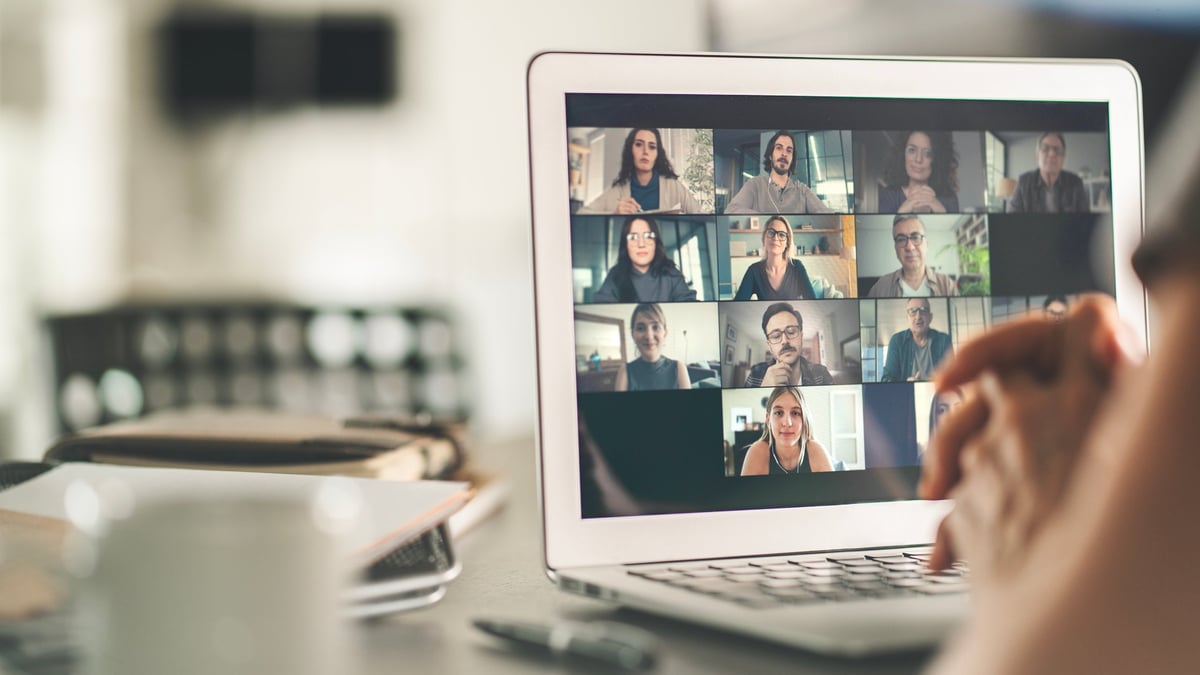
And it was not just budgets that changed overnight. When I started, if you wanted a video call you fired up Google Hangouts and hoped for the best. Then lockdown hit and the entire working world pivoted to Zoom and Teams practically overnight. For about two years my calendar was a solid wall of back-to-back video meetings, everyone a slightly frozen square, someone always on mute. And here is the funny part: now that we can, half of Adelaide has quietly gone back to old school. We would rather meet face to face over a coffee, like it is 2016 again. Ten years of shiny technology, and the thing we missed most turned out to be sitting in the same room. Funny how it all goes full circle.
And then, AI, and the whiplash nobody warns you about. Late 2022, ChatGPT lands, and we all pile on like it is the last lifeboat. Then everyone finds Manus and piles onto that. Then Grok. Then Claude. Every few months there is a fresh messiah and a fresh stampede, usually led by the exact same people who swore, hand on heart, that the last one was the future.
Somewhere in the chaos, "prompt engineer" became a job you could actually put on a CV, a sentence that would have had me quietly escorted out of any room in 2016. The jobs changed as fast as the tools. Roles that kept people busy a decade ago simply evaporated, and brand-new ones turned up that nobody could have advertised for, because the words did not exist yet. Half the industry seems to be permanently reinventing itself, retraining, or eyeing off a job title that was science fiction last Tuesday.
Meanwhile Meta has been quietly force-feeding everyone its own AI, Advantage this and Advantage that, hoovering up the controls we used to have and handing back a big cheerful "trust us". Half of Ads Manager now feels like a vanity trap wearing an automation badge. Some of it genuinely works. Some of it is just the machine marking its own homework.
The tools keep changing. The stampede is the only thing that stays the same.
So after ten years of platforms booming, dying and being shoved aside by the next shiny toy, what have I actually learned? That the fundamentals never moved a millimetre. Know your customer. Make a real offer. Say something true and useful. Send people somewhere that genuinely helps. Every campaign I have ever been proud of, on any platform, in any panic or any boom, came back to those four unglamorous things.
And the part that matters more than any of it: none of this happened solo. Ten years in, most of what I know I owe to other people, the mentors who set me straight when I needed it, the business owners and leaders who backed me before I had earned it, and the team who do the actual work while I sit here writing sentimental blog posts. My businesses would not exist in the shape they do without them, and I am not too proud to say it out loud.
If you had told me in 2016 what the next ten years held, a pandemic boom, an AI that writes better than half the internet, "prompt engineer" printed on a payslip, I would have gently walked you to a quiet room. Which is exactly why I have given up predicting. Give it another ten years and half of what we do today will look as daft as buying likes does now. But whoever writes the 2036 version of this will land on the same last line, because the fundamentals do not have a use-by date, and good people never go out of style.
The arrival of AI. Before late 2022 there was no ChatGPT, no AI Overviews and no AI search to optimise for. Now a growing share of people ask an AI instead of scrolling links, which has changed what being found online even means.
After an initial panic where many businesses paused their ad spend, budgets came roaring back within weeks as the country moved online. It turned into one of the biggest booms the industry has seen, with more businesses investing in websites, ads and every online channel at once.
Differently. Facebook's CPMs have stayed remarkably flat across the decade, while Google's costs have climbed most years. On Facebook the bigger change was targeting precision after Apple's tracking changes, not the price of reaching people.
The same things that mattered ten years ago: knowing your customer, a real offer, useful content and a clear next step. The tools change constantly; the fundamentals do not.
About the author
Founder, Digital Marketing Adelaide
Matt Williamson is the founder of Digital Marketing Adelaide and Adelaide's face of AI Search. He leads the agency's AI search optimisation and training, and is a keynote speaker on how businesses get found in ChatGPT, Gemini and Google AI Overviews.
More about Matt AI Search
 SEO
SEO
 SEO
SEO
 Strategy
 Meta Ads
 Strategy
Book your free strategy call with our Adelaide digital marketing team.
Or call us on 08 8121 5844