
TL;DR
Meta ads (Facebook and Instagram) still reach almost every adult in Australia, and they still work, right up until you run an ad with all the charisma of a parking fine. Most businesses agonise over targeting and audiences, then wonder why nobody stops scrolling. Here's the thing: Meta's algorithm is now very good at finding your buyer. What it cannot do is make a boring ad interesting. Sort the creative and the offer first, and the rest tends to sort itself out.
Every year, someone confidently declares Facebook dead. Every year, Facebook, having not read its own eulogy, keeps quietly reaching most of the country. Between Facebook and Instagram, Meta touches a huge share of Australian adults every single day, across every age group that matters to most businesses.
That reach is the whole point. Google catches people who are already looking for you. Meta puts you in front of people who weren't looking yet, which is how you create demand instead of just standing around waiting to harvest it. For a lot of Australian businesses, that's the difference between hoping the phone rings and making it ring.
Here's where most Meta budgets quietly go to die. Owners pour their heart into audiences: interests, lookalikes, age ranges, radius targeting down to the street corner. Then they run one forgettable image with a caption that reads like a product warranty, and wonder why nothing happens.
The uncomfortable truth in 2026: your targeting is probably fine, your ad is just boring. Meta's algorithm has become genuinely good at working out who to show your ad to, as long as you hand it something worth showing. The lever that mattered five years ago, clever targeting, has mostly been automated. The lever that moves the needle now is the creative.
Your Meta ads don't have a targeting problem. They have a thumb-stop problem. The algorithm can find your buyer. It cannot rescue a boring ad.
People scroll fast. You get roughly one second to earn a second, which is less time than it took to read this sentence. A Meta ad that actually works usually does three things:
Notice that none of that is a setting. It's craft. The best accounts we run aren't the ones with the most ingenious audiences, they're the ones testing plenty of genuinely different creative and letting the winners run. That's why our Meta ads work leads with creative and offer, not a spreadsheet of audiences.
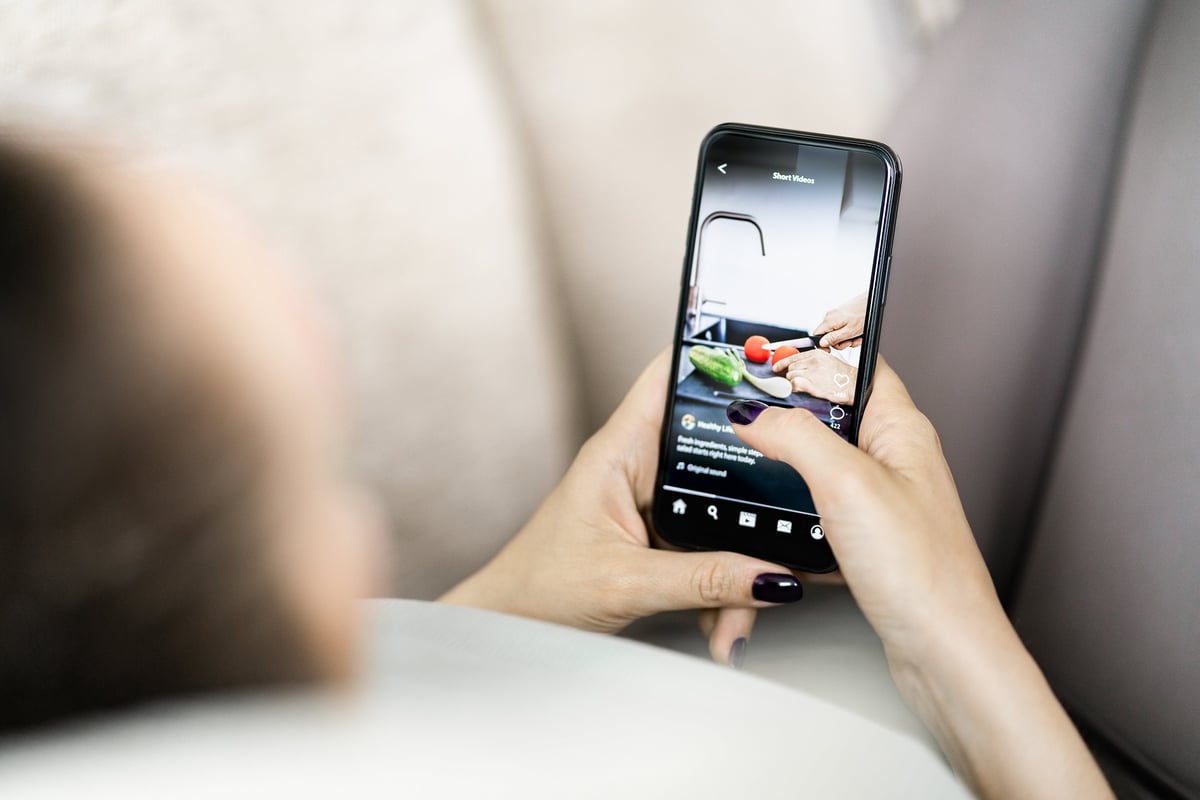
Video and user-generated-style content, the kind that looks like an actual person rather than a glossy commercial, tends to outperform the polished studio stuff on Meta, because it blends into the feed instead of standing up and shouting "advertisement". People trust what looks real.
Like Google, Meta runs on an auction, so there's no fixed price. It just works differently: you're generally paying to reach a thousand people, or per click, or per result, and the per-click numbers are usually far lower than Google, because you're interrupting people rather than catching them mid-search.
That cheaper click comes with a catch: Meta traffic is colder. People weren't looking for you, so more of them are just browsing between cat videos. The businesses that win on Meta plan for that with a strong offer and a smooth path from ad to enquiry, rather than expecting people to convert like they just Googled you with a credit card out.
The real cost that quietly kills accounts isn't the click price. It's running the same ad for eighteen months, never testing anything new, and then blaming the algorithm when the audience nods off. Fresh creative is the ongoing cost of doing Meta properly, and it's the cheapest insurance you'll ever buy.
Key takeaway
On Meta, the creative is the strategy. Put your effort into making genuinely different ads and testing them, not into endlessly fiddling with audiences the algorithm already sorts out for you.
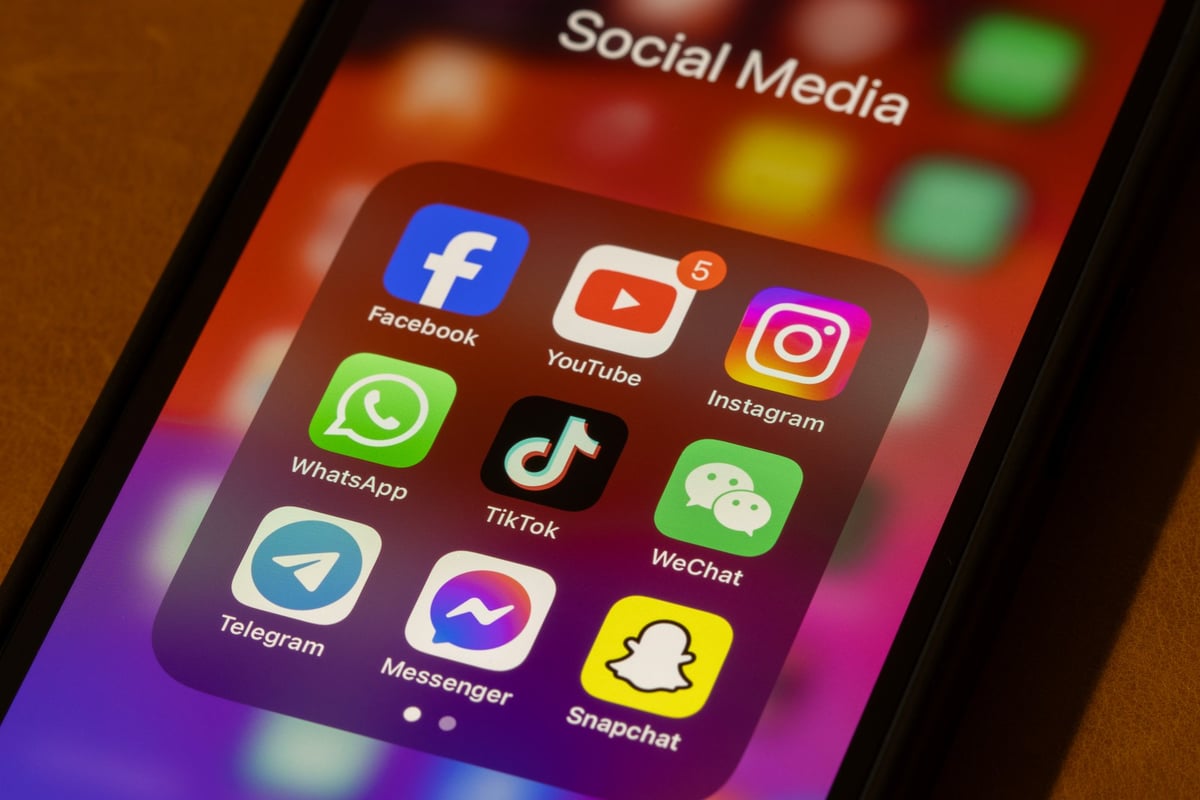
They share an ad system but reach different moods, and often different people.
For most Australian businesses the answer is both, with creative tailored to each. Copy-pasting the identical ad across both is a reliable way to get mediocre results in two places at once. What stops a thumb on Instagram isn't always what works on Facebook, and treating them as one channel leaves money on the table.
The short version: pick the platform your customers actually use, lead with creative that earns a second of attention, back it with a clear offer, and keep the ideas fresh. Do that, and Meta is still one of the best value channels going in Australia.
Yes. Facebook and Instagram still reach most Australian adults daily, and Meta ads work well when the creative and offer are strong. They're especially good for creating demand among people who weren't already searching for you.
Nine times out of ten the targeting is fine and the ad is the problem. Meta's algorithm is good at finding the right people now, so a flat, forgettable ad is the usual culprit. Test genuinely different creative and a clearer offer before you touch the audience.
It runs on an auction with no fixed price, but per-click costs are typically much lower than Google, because you're interrupting people rather than catching active searches. Budget for fresh creative over time, which is what actually keeps an account performing.
Usually both, with creative tailored to each. Facebook skews a little older and suits local and considered purchases; Instagram is more visual and younger. Match the platform to where your customers actually spend their time.
About the author
Founder, Digital Marketing Adelaide
Matt Williamson is the founder of Digital Marketing Adelaide and Adelaide's face of AI Search. He leads the agency's AI search optimisation and training, and is a keynote speaker on how businesses get found in ChatGPT, Gemini and Google AI Overviews.
More about Matt Google Ads
 Strategy
 Strategy
 Strategy
 Local
Local
 AI Search
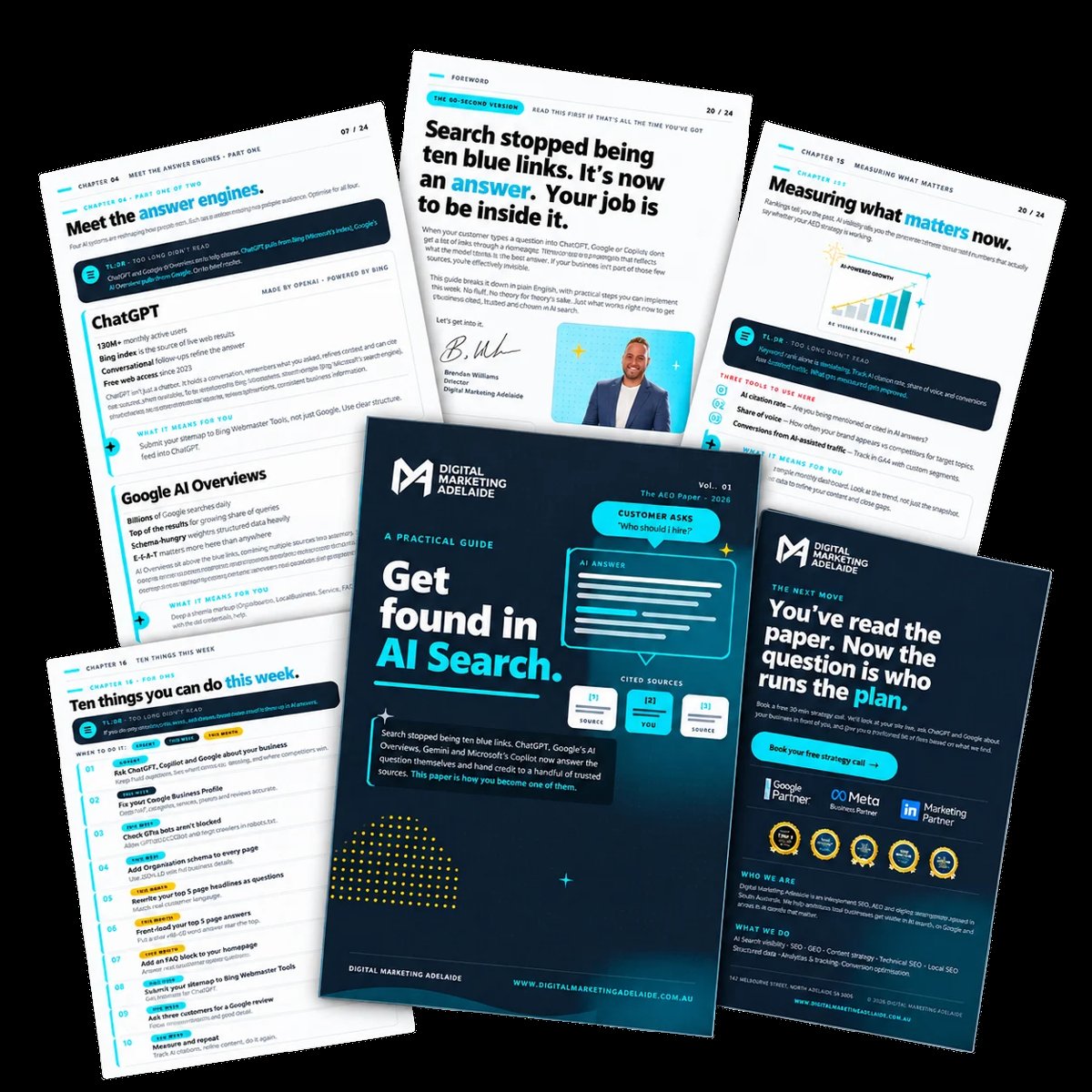
DOWNLOAD THE WHITE PAPER
AI platforms like ChatGPT and Google Gemini now serve direct answers, not just links. Our free white paper explains how to get your business found in AI search, and the practical tactics behind Answer Engine Optimisation (AEO). The playbook we use to get our clients showing up in AI answers. Yours to download.
Download for FreeBook your free strategy call with our Adelaide digital marketing team.
Or call us on 08 8121 5844