
TL;DR
There's no single price, and anyone who quotes you one is guessing. What you pay depends on your industry, your competition and how well your account is run, and cost-per-click in Australia ranges from a few cents to well over $30 in the bloodsport categories like law and trades. But here's the part nobody tells you: if your ads get clicks and no leads, the campaign usually isn't the villain. The landing page and the offer are. Fix those and the same ad spend suddenly starts earning its keep.
Google Ads runs on an auction, so there's no fixed price and no menu. You set a budget, you bid against other businesses for each search, and you pay when someone clicks.
In practice, Australian cost-per-click runs anywhere from under a dollar for quiet terms to $30, $50 or more in the brutal categories: personal injury law, trades, cosmetic surgery, anything where a single customer is worth a small fortune. Most small and mid-sized businesses sit somewhere in the sensible middle.
Which means the real question was never "what does a click cost". It's "what does a customer cost, and is that smaller than what a customer is worth to me". A $40 click sounds terrifying right up until you notice the job it wins is worth $8,000.
Stop asking what a click costs. Ask what a customer costs, and whether that's less than a customer is worth. That single reframe fixes most budget panic.
Three things move your price more than anything else:
That third point is where a well-run Google Ads account pulls away from a set-and-forget one that's been left running like a tap.
This is the most common complaint we hear, and the answer tends to surprise people: the campaign is usually fine. The money leaks out after the click.
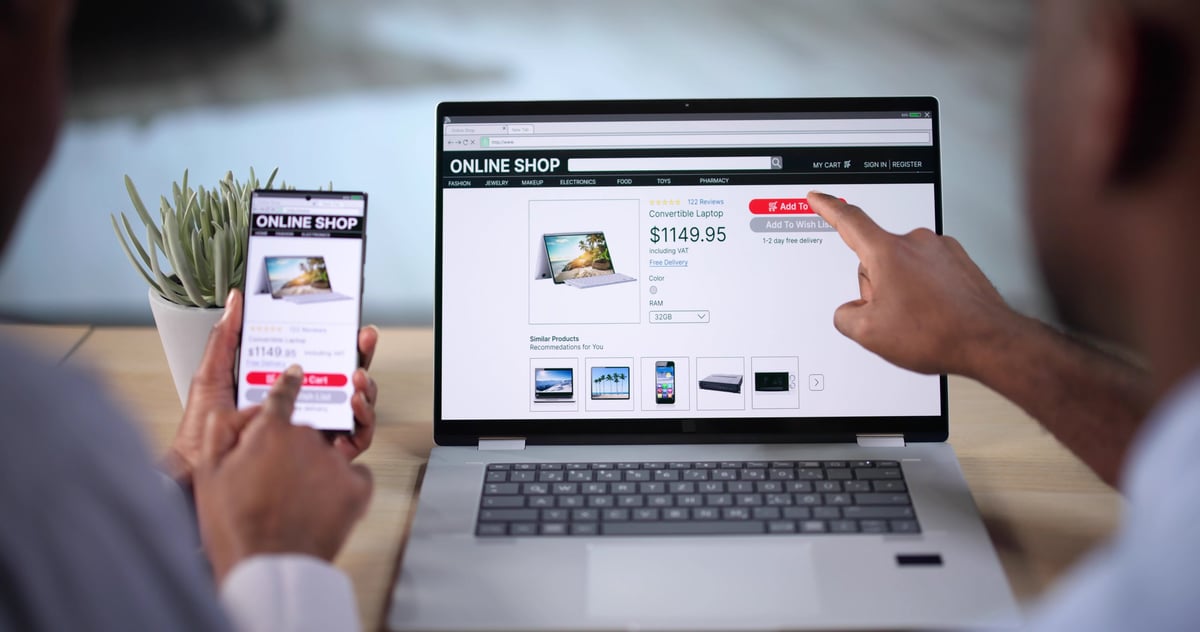
Picture the journey. Someone searches, sees your ad, clicks, and lands on your website. If that page is slow, generic, confusing, or demands their life story before they've decided anything, they leave. You paid for the click and got a polite nothing, and no amount of campaign tinkering rescues a page that doesn't convince.
Nine times out of ten, "my ads don't work" really means one of these:
Getting the page and the offer right is its own discipline, conversion rate optimisation, and it's usually the highest-return fix in the whole account. You don't need more clicks. You need the clicks you're already paying for to do something.
A quick honest word on Performance Max, Google's automated campaign type, because it's everywhere now and most advertisers are quietly baffled by it.
Performance Max hands Google the keys and waves you off: it decides where your ads show across Search, YouTube, Gmail, Display and Maps, and tells you remarkably little about what's actually working. Wonderful when it works, maddening when it doesn't, because the reporting is thin by design.
It can be genuinely effective, but it needs guardrails: clean data on what a real conversion is worth, strong creative, and someone prising transparency out of the black box rather than taking it on faith. Used well, it's powerful. Used as "set it and forget it", it's a generous way to fund Google's experiments on your behalf. If you're weighing it up, our Performance Max page walks through how we keep it accountable.
Key takeaway
More budget rarely fixes a campaign that isn't converting. A focused landing page and a clear offer almost always do. Sort the destination before you pour in more spend.
Do four things and most Google Ads accounts improve without spending an extra cent:
Google Ads is neither expensive nor a bargain by nature. It's a lever, and the return depends entirely on how well the whole system is set up, from ad to page to follow-up.
There's no fixed figure, but many small businesses start somewhere around $1,000 to $3,000 a month in ad spend, adjusted to their industry and the value of a customer. The right budget is one where the cost per customer is comfortably less than what a customer is worth. If you want a hand setting a Google Ads budget that makes sense for your business, we can help.
Usually the campaign is fine and the problem is after the click: a slow, generic or confusing landing page, a weak offer, or no clear next step. Fixing the page and offer typically recovers more results than changing the campaign.
It can be very effective, but it automates a lot and hides much of what it's doing. It works best with accurate conversion data, strong creative and active management forcing transparency, rather than being left on autopilot.
They do different jobs. Ads buy visibility now; SEO earns it over time and keeps paying after you stop. Most businesses do best with a mix, weighted to whichever solves their most urgent problem first.
About the author
Founder, Digital Marketing Adelaide
Matt Williamson is the founder of Digital Marketing Adelaide and Adelaide's face of AI Search. He leads the agency's AI search optimisation and training, and is a keynote speaker on how businesses get found in ChatGPT, Gemini and Google AI Overviews.
More about Matt Strategy
 Meta Ads
 Strategy
 SEO
SEO
 Strategy
 AI Search
Book your free strategy call with our Adelaide digital marketing team.
Or call us on 08 8121 5844