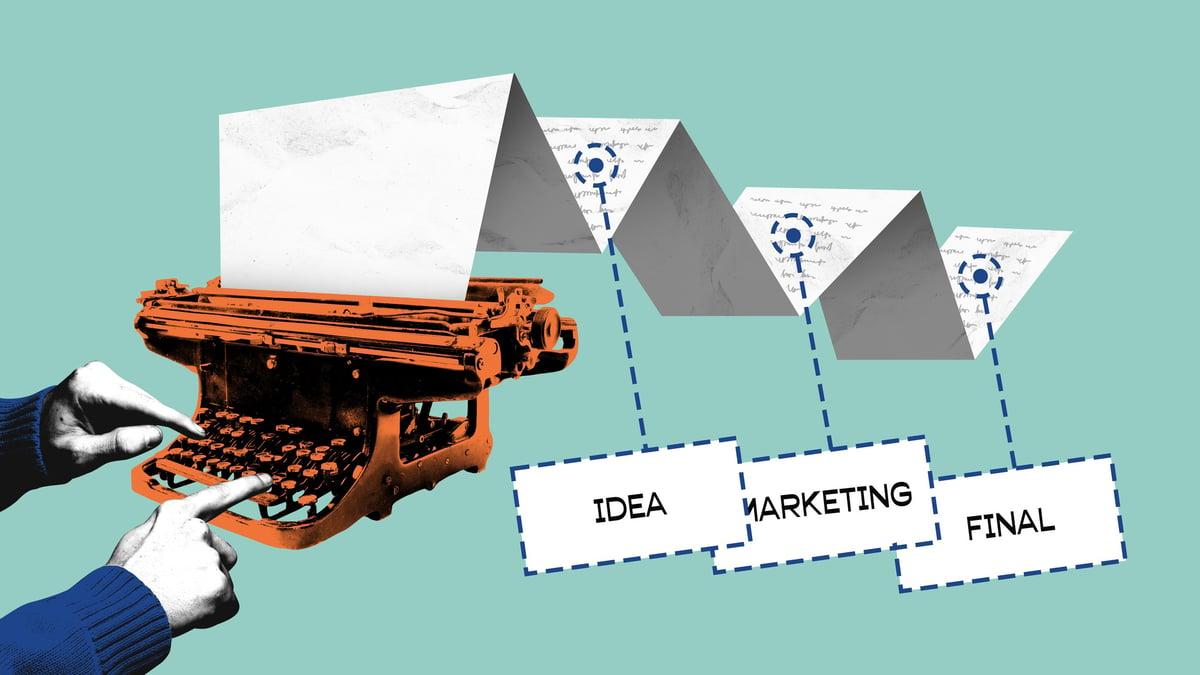
TL;DR
You don't need to publish every week. You need to publish the right thing, built properly, once a month. Content that works in 2026 does two jobs at once: it ranks on Google and it gets quoted by AI engines like ChatGPT and Google's AI Overview. The trick is to answer a real question your customers actually ask, answer it clearly and early, and structure it so both a hurried human and a skimming machine can lift the point. Here's the method, no content treadmill required.
The old content advice was volume: publish constantly, feed the machine, flood the zone. For a business owner with an actual business to run, that advice is useless and quietly a bit cruel. You don't have time to write weekly, and honestly, most of that weekly content was thin, forgettable filler anyway.
In 2026 the game rewards the opposite. One genuinely useful, well-built piece that answers a real question beats ten rushed posts that answer nothing. Both Google and the AI engines are getting better at telling the difference between something helpful and something clearly written to hit a word count. So the goal isn't more. It's better, done consistently.
Every good piece starts with a question a real customer actually asks. Not a keyword you found in a tool. A question. "How much should a new kitchen cost?" "Do I need council approval for a deck?" "Why is my power bill so high in winter?"

Where do you find them? You already have them. They're sitting in the emails your customers send, the questions they ask on the phone, the things your team explains for the hundredth time. Those repeated questions are content gold, because if one customer is asking, hundreds are quietly typing the same thing into Google and ChatGPT. Answer the question they're genuinely asking and you've done the hardest part.
This is the single most important change from old-school blogging, and most businesses get it exactly backwards.
Old habit: build up to the answer with a long intro, a bit of background, a heartwarming story about your founder, and finally the point buried somewhere near the bottom. In 2026 that's an expensive habit. A hurried reader wants the answer now. And an AI engine skimming your page for something to quote will happily lift a clear, early answer and skip the page that makes it dig for one.
So state the answer plainly in the first sentence or two, then elaborate underneath for the people who want the detail. "A new kitchen in Adelaide typically costs between X and Y, depending on Z. Here's what drives the price." Answer first, depth after. It respects the reader, and it's exactly what gets quoted.
Bury your answer at the bottom of the page and you lose twice: the impatient reader leaves, and the AI skips you for a source that gets to the point.
How you lay a piece out decides whether a machine (and a skimmer) can lift the point cleanly. A few habits do most of the heavy lifting:
None of that changes what you're saying. It changes how easily it can be found, understood and repeated, which is the entire game once machines are reading your content as much as people are. This is where the line between good SEO and AI search visibility blurs completely, the same well-built page earns both.
Key takeaway
Answer a real question, answer it in the first two sentences, and structure it so a skimming human and a skimming machine can both lift the point. Do that once a month and it compounds.
Here's the whole thing as a repeatable habit any business can actually run:

Twelve pieces a year, each answering a real question properly, will do more for your visibility than a frantic weekly schedule of thin posts, and, crucially, it's sustainable for a business that has other things to do. Quality, structured for both search and AI, published consistently. That's the entire secret, and yes, this very post was built exactly that way.
Consistency beats volume. One genuinely useful, well-structured post a month that answers a real customer question will usually outperform a frantic weekly schedule of thin posts, and it's far more sustainable.
Answer a real question clearly in the first sentence or two, use clear headings, short paragraphs and lists, include a plain-language FAQ, and add structured data. AI engines lift clear, early, well-structured answers.
The questions your customers actually ask you, in emails, on the phone, and over and over to your team. If one customer is asking, many more are searching the same thing.
Yes, but the winning formula changed from volume to quality. Useful, well-structured content that answers real questions ranks on Google and gets quoted by AI, while thin content written to hit a word count does neither.
About the author
Founder, Digital Marketing Adelaide
Matt Williamson is the founder of Digital Marketing Adelaide and Adelaide's face of AI Search. He leads the agency's AI search optimisation and training, and is a keynote speaker on how businesses get found in ChatGPT, Gemini and Google AI Overviews.
More about Matt AI Search
 SEO
SEO
 SEO
SEO
 Local
Local
 Strategy
 Strategy